Showing posts with label drought. Show all posts

Tuesday, 30 April 2013

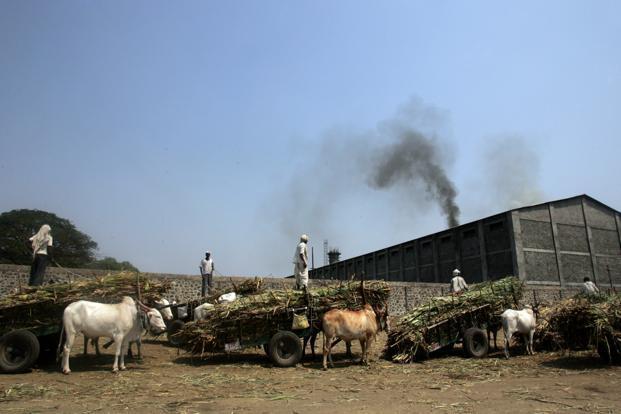
Maharashtra's water is going to sugarcane and grapes barons

Srijana Mitra Das Apr 3, 2013, 12.00AM IST                                             The ongoing drought in Maharashtra is being described as the state's worst in many decades, causing agricultural distress and forcing villagers to move to urban areas looking for work. Vandana Shiva, environmental activist and an authority on biodiversity, spoke with Srijana Mitra Das about factors driving this drought, its impact  and how it can be contained:


What is the scale of Maharashtra's drought and who's been worst hit?

Large parts of Maharashtra lie in the rain-shadow of the Western Ghats. It is therefore a drought-prone area geographically. But drought vulnerability can be reduced or increased according to how we use land and water. This year`s drought has been described as worse than the 1972 drought yet, if you look at rainfall, 1972`s figures are worse than those of 2012 in most districts.

Today, some of the worst affected districts are Solapur, Pune, Ahmednagar, Sangli, Satara, Osmanabad, Beed, Latur, Nashik, Jalna, Parbhani and Aurangabad — these are also districts where sugarcane cultivation is concentrated.

Is such intensive cash-cropping a cause?

Well, in 1982, i was invited by the Planning Commission to study why, in spite of spending huge amounts on Maharashtra`s water crisis, the problem did not go away. I travelled across the state and researched water use. When Maharashtra needed additional money to deepen wells during its 1972 drought, the World Bank put a condition that Maharashtra would replace its drought-resistant millet crops with sugarcane and its shallow open wells with tube-wells.

Maharashtra receives about 600 mm of rainfall of which only 10% recharges groundwater. That means only 60 mm water is available annually for sustainable water withdrawal — sugarcane needs more than 1,200 mm. Growing sugarcane in drought-prone areas is a recipe for water famine. Yet, the area under sugarcane cultivation in Maharashtra has gone up from 1,67,000 ha in 1970-71 to 10,22,000 ha in 2011-12.

Now, Maharashtra is also growing grapes for export while the cultivation of monocultures of Bt cotton is also making the soil more vulnerable to drought by killing micro-organisms that build the soil`s water-holding capacity. In addition, Maharashtra also has the largest number of dams which have failed to reduce drought vulnerability.

What will the impact of this drought be and is it likely to spread?

If non-sustainable land and water use continue, the drought will spread even when rainfall is normal. The most vulnerable immediately are the poor who will be forced to migrate as environmental refugees. Agrarian distress and farmers` suicides will increase because farmers have spent huge amounts on costly seeds and chemicals a crop failure will make the debt trap a death trap.

What are possible corrective measures?

In a drought-prone area, water harvesting is the answer not water mining. The tank systems of the Deccan are an example of how to create insurance against droughts. Maharashtra needs to harvest its rain, not mine its groundwater and reroute its rivers to rich sugar barons and now, grape barons.

The soil is the largest water reservoir. To hold moisture in the soil, we need to add organic matter. This is why organic farming is vital for drought-prone areas. Millets are suited to Maharashtra`s soil, water and food culture. A wrong transition was made to sugarcane and Bt cotton. This needs to be corrected with a transition to water-prudent crops like millets and mixes with pulses and oilseeds. That`s what we do in Navdanya, the network of organic producers and seed-keepers across several states and it works.


Krishna, Godavari basins drying up

Monday, Mar 18, 2013, 11:08 IST | Place: Mumbai |
Yogesh Pawar


DNA has found out how sugarcane irrigation is drying up the Krishna and Godavari basins. So much so, it now commands maximum irrigation water in the state!


Since a South Asia Network on Dams, Rivers and People (SANDRP) study showed largest amount of water-intensive sugarcane is grown in the most chronic drought-hit Solapur region which also receives the maximum central drought aid, DNA has found how sugarcane irrigation is drying drought-affected Krishna and Godavari basins too. So much so, it now commands maximum irrigation water in the state! (See tables)

Though leading agronomic experts, organisations and reports by institutions like World Bank have often highlighted the unjustifiably high share of sugarcane in Maharashtra’s irrigation, in a cruel irony, a memorandum for drought relief sent to the Centre from Maharashtra in 2003-04 justifies this calling the water-sapping cane “the state’s agro-economic lifeline.”

Parineeta Dandekar of the SANDRP told DNA, “More than agro-economy, sugarcane is currently the lifeline of political economy. Sugar barons who treat constituencies like personal fiefs don’t want to think beyond personal short term profits.”

Scoffing at official claims of three million farmers plus labourers are involved in sugarcane farming, Dandekar asks, “Even if a million ha were under sugarcane, how can three million be involved in sugarcane farming when average farm size in Maharashtra is 1.45 ha?”

“Instead of hiding behind dubious statistics, politicians should ensure farmers don’t suffer the same fate repeatedly. Climate change means droughts are more frequent. The only way out is to improve resilience of agro-economic and water management systems. Encouraging sugarcane in chronically drought affected areas is poor adaptation and pushes dependent farmers further into the vicious cycle of uncertainty, drought, crop failures, and hardships.”

Others point out how sugar-baron politicians obstruct district collectors from exercising their power to reserve water for drinking in any project.

For instance Osmanabad collector KM Nagzode wrote to the state sugar commissioner on 29 November 2012 that his district had received only 50% of average rainfall, and water levels in dams were extremely low while ground water hadn’t been replenished. “Since a sugar factory uses at least a lakh litres of water daily, it’d be advisable to suspend crushing and divert harvest to neighbouring districts.” However such orders were never given and cane crushing went on.

With over 25,100 hectares under it, the arid Osmanabad is a major sugarcane producer thanks to it getting all the irrigation.

This year Maharashtra had sought Rs2,500 crores for drought relief. The Centre has agreed to less than half the amount (Rs1,207 crore) on March 12. “Yet, one can imagine politicians and ministers salivating over siphoning money under EGS, tankers and cattle camps or still fancier ones like water trains. With the first rain, they’ll be back to aggressively plugging sugarcane,” laments a senior state water resources bureaucrat. “It took very long for Anna Hazare and Popatrao Pawar to eradicate the sugarcane scourge from their own villages of Ralegan Sidhi and Hiware Bazar. Wonder who will do this for the remaining state?”

Explaining why sugarcane is attractive he added, “Unlike other crops, cane merely requires switching on the pump to flood fields. Also given how politicians bend over backwards in increasing procurement price every year makes it more and more attractive.”

According to him it will need a tall leader who the farmers trust and believe in to take them away from sugarcane.  “The only one who can do it is busy managing cricket. As for the others, I wouldn’t be surprised if they think sugar directly grows in fields,” he lamented with a smile.


Drought-hit Solapur grows water-guzzler cane
Wednesday, Mar 13, 2013, 8:30 IST | Place: Mumbai
Yogesh Pawar

Sugarcane, the most water-intensive crop grown in Maharashtra, requires 10 times more water than jowar or groundnut.

Sugarcane, the most water-intensive crop grown in Maharashtra, requires 10 times more water than jowar or groundnut.  Yet the regions it is grown in most are chronically drought-hit, and receive highest central aid for drought relief. What’s worse a dismally low amount of sugarcane area under drip irrigation. These findings of a latest study by South Asia Network on Dams, Rivers and People (SANDRP) come at a juncture when CM Prithviraj Chauhan has officially admitted “11,801 villages are in the grip of a drought worse than 1972.” More than 50% of these are in Solapur district alone.

The study slams the government for agro policies points out how the current drought and the hardships it brings in its wake are being compounded by politicians from the sugar lobby.

“The drought hasn’t exactly crept in by stealth. It’s building since August 2012, when over 400 villages were officially declared drought-hit,” observed Parineeta Dandekar of SANDRP who has conducted the study. ““The sugarcane farmers’ protest over fair price was boiling for past few years and the government kept ignoring warnings about the irrigation scam, despite its unprecedented scale in the same period.”

According to the study all these factors have not come together in a mere unfortunate coincidence. ““It makes reasons behind Maharashtra’s drought starker than poor rainfall. Unless addressed, no amount of state and central assistance can reduce the misery of the people struggling with drought.”

The study points out how In 2009-10, of the approximate 25 lakh hectares (ha) of irrigated area in Maharashtra 3,97,000 ha was under sugarcane.  Area under sugarcane grew to 9,70,000 ha in 2010-11 and then to 10,02, 000 ha by 2011-12. “When grown on 16% irrigated area, sugarcane used 76% of all water available for irrigation.  With increasing area under sugarcane, its hegemony has increased exponentially.  Not only does it capture maximum water, it results in water logging, salinity and severe water pollution by sugar factories,” it says. Incidentally, at 209  Maharashtra has the largest number of sugar factories in India.

The study uses Solapur district in Bhima basin to connect drought with sugarcane. Here drinking water supply is already a severe problem. Despite over a 1,000 tankers being pressed into service, an exodus of stricken communities to urban areas has begun. Though chronically drought-hit, this worst drought-hit district in the country has the largest areas in any single district growing sugarcane (vis-a-vis size) according to the new study.

With an average rainfall of 550 mm Solapur is the largest sugarcane producer in the state and has densest concentration of both area under sugarcane (see pie chart above) and sugar factories. The district includes Union agriculture minister Sharad Pawar’s parliamentary constituency too. “That such water-intensive cropping should flourish in an arid region in Pawar’s own constituency talks a lot about both political power of sugarcane and the attitude of the ministry,” remarks the study.

The study shows how several sugar factories upstream of Ujani, take water through unauthorised lifts from the backwaters and places total water going to sugarcane from the dam to be over 80%. “This causes severe water scarcity downstream, and Solapur faces the brunt of drought,” it observes and adds, “This diversion can’t happen without political support. Of the 30 cabinet ministers in the state, 13 either own sugar factories, or substantial shares in them.”

Pointing out the irony of the state’s recent white paper on irrigation projects which boasts that Ujani irrigates 92,000 ha of sugarcane, the study asks how such shocking usage can be justified in a drought-prone, acutely low rainfall region.

When approached for comment Solapur Collector Pravin Gedam told DNA that he had already communicated the concerns of district administration to state authorities. “We have already exhausted 17% of the dead water so obviously we are concerned. We are rationing out whatever if left so that we can go on till the monsoon,” he said and added, “We raid and confiscate pumps whenever we hear of illegal lifting of water upstream.”

Source: DNA http://www.dnaindia.com/mumbai/1809327/report-drought-hit-solapur-grows-water-guzzler-cane


Sunday, 14 April 2013

Drought in Maharashtra: The real story


The fact that the state's most drought-prone regions have continued to devote precious resources for highly water-intensive sugarcane cultivation and sugar production indicates that there is more to the region's water crisis than climatic conditions alone. Parineeta Dandekar analyses. 


14 March 2013 - This year seems to be a year of basalt-hard lessons for Maharashtra. The year saw the irrigation scam, sugarcane farmers protesting for a fair price (leading to the death of two farmers) and now a ‘drought worse than 1972’ with 11,801 villages declared to be drought affected in March 2013.


If we analyse these three events in perspective, their link becomes inextricably clear. This year’s drought, though devastating, was not an unannounced calamity. It had been building up since August 2012, when more than 400 villages were declared drought-affected. The protest by sugarcane farmers was not a sudden outburst either; their discontent over fair price for sugarcane had been simmering and occasionally boiling over for the past few years. Last but not the least, the irrigation scam, though unprecedented in scale, was not a sudden revelation. Many NGOs, whistle blowers and government committees had been warning about the tip of the iceberg for several years.

Many experts, organisations and reports like World Bank have highlighted the unjustifiably high share of sugarcane in Maharashtra's irrigation

That all these factors came together in one year is not just an unfortunate coincidence. It shows that the reasons behind the Maharashtra drought are starker than simply less rainfall. Unless these root causes are addressed, no amount of state and central assistance can banish droughts. Farmers and rural and urban poor have been suffering for too long due to the opportunistic and myopic response of the political and administrative leadership in Maharashtra to successive droughts. To understand and change this, we need to first take a long, deep look at some of the reasons sparking the water shortage:

Worst drought-affected districts have the most sugar factories
Sugarcane is one of the most water-intensive crops grown in Maharashtra, requiring ten times more water than Jowar or nut. Ironically, the regions where it is grown the most are chronically drought hit regions, which have been receiving central aid for drought proofing though the Drought Proof Area Program and other such schemes. Sugarcane area under drip irrigation in these regions is dismally low.

According to the Water Resources Department, Maharashtra, in 2009-10, of the approximate 25 lakh hectares (Ha) of irrigated area in Maharashtra, 3,97,000 Ha was under sugarcane. However, according to the Union Agricultural Ministry (which would get its data from the State Agricultural Department), area under sugarcane was 9,70,000 hectares in 2010-11 and again 10,02, 000 hectares in 2011-12.

When it was grown on 16% Irrigated area, sugarcane used 76% of all water for Irrigation. With area under sugarcane increasing, its hegemony has increased exponentially.  Not only does it capture maximum water, it results in water logging, salinity and severe water pollution by sugar factories. Incidentally, Maharashtra has 209 sugar factories, the highest in any state in India.

A strong example of links between drought and sugarcane may be found in the Solapur District in the Bhima Basin, which is facing the worst of droughts today. Live storage of Ujani Dam is zero and drinking water is being taken from dead storage, even as Solapur and 400 villages depend on Ujani for drinking water. Drinking water supply has become a severe problem. Hundreds of villages and blocks have been declared drought affected. Nearly 1000 tankers have been plying, and there is a near exodus of stricken communities to urban areas.
When it was grown on 16% Irrigated area, sugarcane used 76% of all water for Irrigation. With area under sugarcane increasing, its hegemony has increased exponentially. Not only does it capture maximum water, it results in water logging, salinity and severe water pollution by sugar factories. Incidentally, Maharashtra has 209 sugar factories, the highest in any state in India.
Solapur also includes the Union Agriculture Minister’s parliamentary constituency Madha. This chronically drought-prone district, with average annual rainfall of 550 mm, is the largest sugarcane producer in Maharashtra with the densest concentration of sugar factories and area under sugarcane (see pie chart above). That such water intensive cropping pattern in an arid region should flourish in Union Minister of Agriculture Sharad Pawar’s constituency speaks volumes about the political backing for sugarcane and the attitude of the Ministry.


During a meeting at the Ministry of Environment and Forests (MoEF), officials from the Water Resource Department (WRD) claimed that of the 87 TMC (Thousand million cubic feet) live storage of Ujani, 50-60 TMC is flow irrigation to sugarcane in command, accounting for more than 60% of its live storage. The authorised use, however, is only 32 TMC! In addition, there are several sugar factories in the upstream of the Ujani dam, taking water through unauthorised lifts from the backwaters. So, actual water going to sugarcane from Ujani is estimated to be close to 80% or more. This is causing severe water scarcity in the downstream regions, creating severe drinking water crisis.

All of this diversion apparently happens with political support. Of the 30 cabinet ministers in Maharashtra, 13 ministers either own sugar factories, or a substantial share in these. The White Paper on Irrigation Projects proudly boasts that the Ujani Project irrigates 92000 hectares of Sugarcane.

Apart from Ujani, Pune region (Districts Satara, Solapur and Pune), Ahmednagar Region, Aurangabad region and Nanded region, - all of them drought-prone areas - also have a dense concentration of sugar factories, aided by irrigated sugarcane fields in the vicinity.

Sugarcane is increasing in area in drought affected Krishna and Godavari Basins too, commanding maximum share of the irrigation water. This is borne out by the table below, all figures taken from the Maharashtra Irrigation Status report 2009-10 (the latest one available).

Area under main crops in thousand hectares
(canals, groundwater and rivers) ISR 2009-10
Region
Jowar
Wheat
Ground nut
Harbhara
Rice
Oilseed
Sugar-cane
Cotton
Fruits
Pune
221.43
191.85
38.68
52.85
96.96
61.58
315.97
5.77
13.80
Aurangabad
29.38
33.33
5.07
12.68
0.08
2.30
43.30
27.83
5.48

Sugarcane: Lifeline of the political economy of Maharashtra

A Memorandum for Drought Relief sent to the centre from Maharashtra in 2003-04 said that Sugarcane is the “Lifeline of the agro economy of Maharashtra”. However, more than a lifeline of the agro-economy, it appears to be so for the political economy of Maharashtra. Hugely entrenched in sugar politics, the political economy is unable to take any brave and sustainable decisions when it comes to cultivating sugarcane. As experts have pointed out in the past, entire water management of Maharashtra revolves around sugarcane.

The Ujani Dam, sanctioned in 1964 for 40 Crores is still not complete, while the expenses have been pegged at nearly 2000 Crores. Even as the main canal work is incomplete, more and more lift irrigation schemes, link canals, underground tunnels are being planned on this dam, for sugarcane. Incomplete projects, with bad distribution network, which has been the hallmark of the irrigation scam, has aided sugarcane cultivation the most and has resulted in concentration of water in small ‘pockets of prosperity’ amidst drought affected zones and thirsty tail-enders.

Osmanabad collector K.M. Nagzode had written to the state sugar commissioner on 29 November 2012 that Osmanabad “had received only 50% of average rainfall, and water levels in dams are extremely low while ground water hasn’t been replenished and that since a sugar factory typically uses at least one lakh litres of water a day, it would be advisable to suspend crushing and divert the harvest to neighbouring districts”. However, no such orders were given and cane crushing went on. Osmanabad district contributes significantly to sugar production of Maharashtra, with over 25100 hectares of sugarcane, which is the only crop that gets irrigation in this district.

District Collectors have the right to reserve water for drinking in any major, medium and minor projects, when they see the need. However, even when Ujani was reaching zero live storage, such decision was not taken by the Solapur Collector.

Everybody loves a good drought

A Memorandum for drought relief sent by the Maharashtra government to the Centre does not seem to be in the public domain, but the state is reportedly seeking Rs 2500 crore for drought relief. The Memorandum for drought relief, 2003-04 shows that during every drought, we indulge in the same fire- fighting measures of resorting to the Employment Guarantee Scheme, tanker water supply, cattle camps and well-control. Once the drought passes, sugarcane is pushed again.

Currently 3 million farmers and significant number of labourers are involved in sugarcane farming, it is claimed. In reality, even if a million hectares were to be under sugarcane, how can 3 million farmers be involved in sugarcane farming when the average farm size in Maharashtra is 1.45 hectares?

We have neither been able to solve the minimum price for sugarcane lock till now. Farmers have been demanding Rs 4500 per tonne of sugarcane from sugar industries, which have agreed to only Rs 2300/ tonne. In Vidarbha, the situation is even worse with prices at Rs 1500/ tonne. The government has made it clear that it will not interfere in the issue. Many sugar industries did not even pay last year’s dues to farmers. Globally and in Indian markets, sugar prices are going down. Last November, during farmers’ protests for minimum price for sugarcane, two farmers lost their lives. This protest was the strongest in the drought hit region around Ujani Dam.

Instead of hiding behind claims of three million sugarcane farmers, politicians need to ensure that these farmers do not have to suffer the same fate time and again. With climate change, droughts have become a more frequent reality. The only way to tackle and manage droughts is to improve the resilience of the agro-economic system and water management systems in coping with droughts. Encouraging and pushing for sugarcane in chronically drought-affected areas is a poor adaptation measure and only pushes farmers deeper into the vicious cycle of uncertainty, crop failures, and hardships.
Drip Irrigation: A Band-aid solution?
The Maharashtra state government is planning to make it mandatory for sugarcane growers to use drip irrigation systems over the next three years, a move prompted by the drought. “Hence a regulation will make a big difference in the water utilization pattern in the agro-sector,” chief minister, Prithviraj Chavan said in an interview.

Measures like drip Irrigation, sprinkler irrigation, etc, though critical, are incapable of arresting the proliferation of sugarcane, a fundamentally inappropriate crop in drought prone areas. Moreover, despite the relative abundance of sugarcane and heavy subsidies for drip, sugarcane belts have stuck to flood irrigation and have not adopted drip the way Nashik region has for grapes. Of the one million hectares under sugarcane, barely 10% is under drip. Even the Union Agriculture Minister’s constituency has not shown any notable success on this front.

As sugarcane is claiming almost all of irrigation and also domestic water from dams in the drought-affected zones, villagers in Marathwada and Western Maharashtra do not have drinking water; students are missing their exams to attend to cattle at cattle shelters and hospitals have to postpone surgeries for want of water. If at all Maharashtra wants to liberate itself from the shackle of regular droughts, one of the things it must first do is break free from sugarcane, and politicians who push the mirage of sugarcane in the absence of any sustainable efforts towards improving farm livelihoods.

This drought would not have been so severe if Maharashtra had broken the shackles of sugar earlier.


14 March 2013

Parineeta Dandekar is with the South Asia Network on Dams, Rivers and People.

References and Links
1.     Bharat Patankar, Asserting the Rights of the Toiling Peasantry for Water Use, IWRM in India
2.     Irrigation Status Report 2009-10, Maharashtra Water Resources Department
3.     64th Meeting of the Expert Appraisal committee on River Valley and Hydropower projects: TOR for Shirapur Lift Irrigation Scheme
4.     Revised Memorandum to the Government of India on Drought Relief and Mitigation in Maharashtra (2003-04)
5.     Agriculture Statistics at a Glance 2012, Ministry of Agriculturehttp://eands.dacnet.nic.in/Publication12-12-2012/Agriculture_at_a_Glance 2012/Pages85-136.pdf